




1000 articles and counting

We’ve reached a huge milestone. There are now 1,000 articles on Designing Buildings Wiki.
We started out with a simple vision – to put all construction industry knowledge in one place and make it available to everyone for free. This was a direct response to the persistent problems of poor dissemination, single-discipline silos, adversarial behaviour and reluctance to innovate which have blighted the industry for as long as anyone can remember. As far back as 1944, the Simon Report recommended better training of construction managers and a more collaborative approach to design and construction. More recently Construction 2025 highlighted, "lack of collaboration and limited knowledge sharing" and proposed that, "best practice must be disseminated across the industry... so that the vast amount of research is translated into real improvements."
We imagined a different sort of industry; where every individual, every organisation and every discipline had access to all industry knowledge; where clients could find out what ought to be happening on their project; where consultants could access the latest research; where we all had a better understanding of other disciplines and specialisms; where we could share best practice and prevent mistakes. It's both simple and revolutionary.
Now we have 1,000 articles, ranging from general introductions to subjects like planning permission, right through to uber-detailed articles for specialists, like the resonant column method for measuring the dynamic response of soils. We even have an article on notation which tells me I should have written 1000 not 1,000 to avoid confusion with the continental decimal marker.
250,000 people have benefitted from free access to the articles on Designing Buildings Wiki, helping them to operate more efficiently, innovate more effectively and avoid problems.
There’s still a long way to go. We're reliant on you to keep adding new articles and improving what’s already there. It’s really easy to do – just click on the big orange button. If you’re not sure where to start, have a look at the list of articles we know we are missing, or the list of articles needing more work.
Next stop 2,000.

IHBC NewsBlog
IHBC sponsors Gardens Trust event 23-4 Sept 2026
.jpeg)
'Learning from the Past, Shaping the Future’ takes place in Milton Keynes
Renovations to Frank Lloyd Wright's Fallingwater complete
.jpg)
World Heritage Preserved project opens house for tours again
Shakespeare Birthplace Trust places Hall's Croft on HAR Register
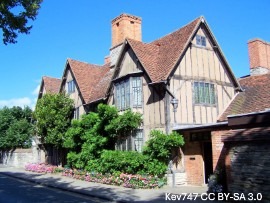
Stratford-upon-Avon home of Shakespeare's daughter is 'At Risk'
Lady Grange’s House repaired on St Kilda
.jpg)
National Trust for Scotland repairs stone cleit with link to famous island resident
Griff Rhys Jones on BBC Radio 4 Today programme
,_Green_Lane,_Derby.jpg)
The Victorian Society’s President unveiled its latest Top Ten Endangered Buildings 2026.
Need a MATE? Book your place now.
IHBC offers free webinars on applying for IHBC accreditation (Full & Associate).
UK Stained Glass Repository finds windows new homes
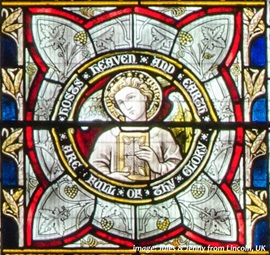
How are stained glass windows are rescued, stored and repurposed?
APPGEBE report sets high aims for quality
'Government must not sacrifice quality in drive to build 1.5m homes'
New measures protect Historic Shipwrecks from heritage crime

Underwater cultural heritage benefits from new HE guidance
How could the City of London skyline look in 6 years' time?

Visualisation shows approved planning applications as completed buildings
National Trust for Scotland calls for VAT cuts
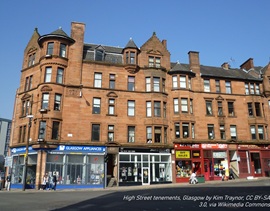
Heritage neglect is encouraged by current policies
IHBC's 'Context' Issue 186 features Industrial Heritage
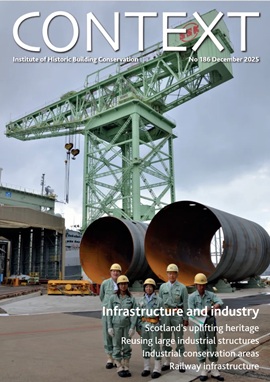
IHBC's members' journal reports on the challenges of conserving infrastructure
Book now for IHBC Annual School 2026
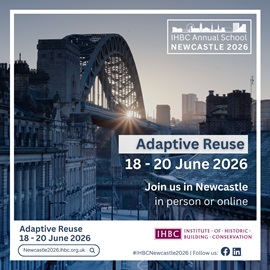
IHBC Annual School is taking place 18-20 June 2026 in Newcastle
RICHeS Research Infrastructure offers ‘Full Access Fund Call’
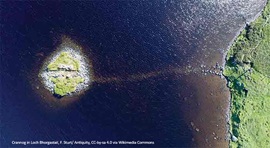
RICHeS offers a ‘Help’ webinar on 11 March
Latest IHBC Issue of Context features Roofing
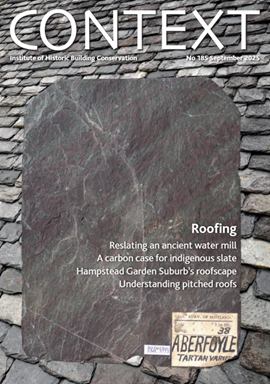
Articles range from slate to pitched roofs, and carbon impact to solar generation to roofscapes
Three reasons not to demolish Edinburgh’s Argyle House

Should 'Edinburgh's ugliest building' be saved?
IHBC’s 2025 Parliamentary Briefing...from Crafts in Crisis to Rubbish Retrofit
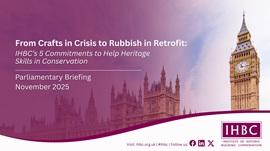
IHBC launches research-led ‘5 Commitments to Help Heritage Skills in Conservation’
How RDSAP 10.2 impacts EPC assessments in traditional buildings

Energy performance certificates (EPCs) tell us how energy efficient our buildings are, but the way these certificates are generated has changed.